

What is the Beaufort Scale?
The Beaufort Scale is one of the oldest and most practical ways to understand wind strength. Instead of relying only on numbers, it describes how the wind behaves and what effects it has on the environment.
It was introduced in the early 19th century by Francis Beaufort, an officer of the Royal Navy, who needed a consistent way to describe sea conditions during voyages.
More than 200 years later, the scale is still widely used across the world.
How the scale works in real life
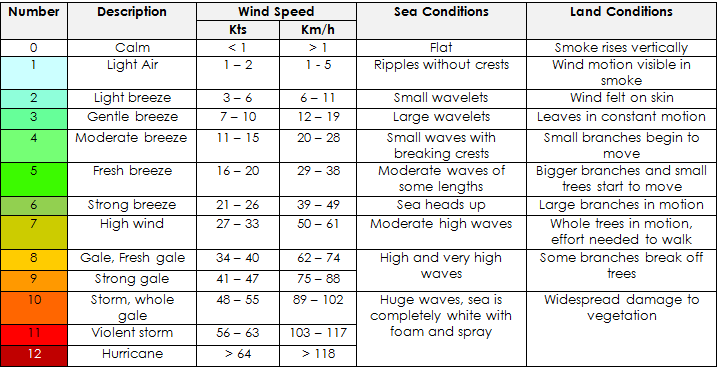
The Beaufort Scale ranges from 0 to 12, starting from completely calm conditions and reaching hurricane-force winds.
What makes it unique is that it doesn’t just describe wind speed. It translates wind into visible, real-world effects. At the lowest levels, the air is almost still, and smoke rises straight upward. As the wind strengthens, you begin to notice leaves moving, branches swaying, and eventually entire trees bending.
By the time higher levels are reached, the environment changes dramatically. Walking becomes difficult, objects are blown away, and structural damage can occur.
From gentle breezes to violent storms
At the lower end of the scale, conditions are mild and often pleasant. Light breezes may barely move leaves, while moderate winds can create small waves at sea and stir dust on land.
As wind speeds increase into the middle range, the effects become more noticeable. Trees begin to sway, and the wind becomes a constant presence rather than a background element.
At the upper levels, the Beaufort Scale describes truly dangerous conditions. Strong gales and storms can break branches, damage buildings, and disrupt transportation. At level 12, the wind reaches hurricane strength, capable of causing widespread destruction.
Why the Beaufort Scale still matters
Even in an era of advanced weather instruments, the Beaufort Scale remains highly relevant. Modern tools can measure wind speed with great accuracy, but numbers alone don’t always help people understand what those speeds actually feel like.
The Beaufort Scale bridges that gap. It connects scientific measurements with human experience, making it easier for anyone to visualize the impact of wind conditions.
This is why it is still used by meteorologists, sailors, and weather services around the world.
Wind, weather and extreme events
Strong winds are often linked to some of the most powerful weather phenomena on Earth.
Events such as Hurricane systems, severe storms, and even Tornado outbreaks can be better understood through the Beaufort Scale.
By knowing how wind behaves at different levels, people can better prepare for extreme weather and recognize when conditions are becoming dangerous.
A simple scale with lasting importance
The Beaufort Scale remains one of the most intuitive tools in meteorology.
It transforms invisible air movement into something we can see, feel, and understand. And that simplicity is exactly what has allowed it to stand the test of time.


