

Beneath the iconic landscapes of Yellowstone National Park lies one of the most powerful geological systems on Earth — a supervolcano capable of producing eruptions on a scale far beyond anything seen in modern history. While millions visit Yellowstone each year for its geysers, hot springs, and wildlife, few fully realize that this natural wonder sits atop a vast and dynamic volcanic system that continues to evolve beneath the surface.
What Makes Yellowstone So Unique
Unlike typical volcanoes, Yellowstone is not defined by a single peak but by an enormous caldera formed after past massive eruptions. Supervolcanoes like Yellowstone are capable of releasing extraordinary volumes of volcanic material, with the potential to impact not just the surrounding region, but the entire planet. These types of eruptions are extremely rare, but when they occur, they can alter global climate patterns, reduce sunlight for extended periods, and disrupt ecosystems on a massive scale.

A History Written in Massive Eruptions
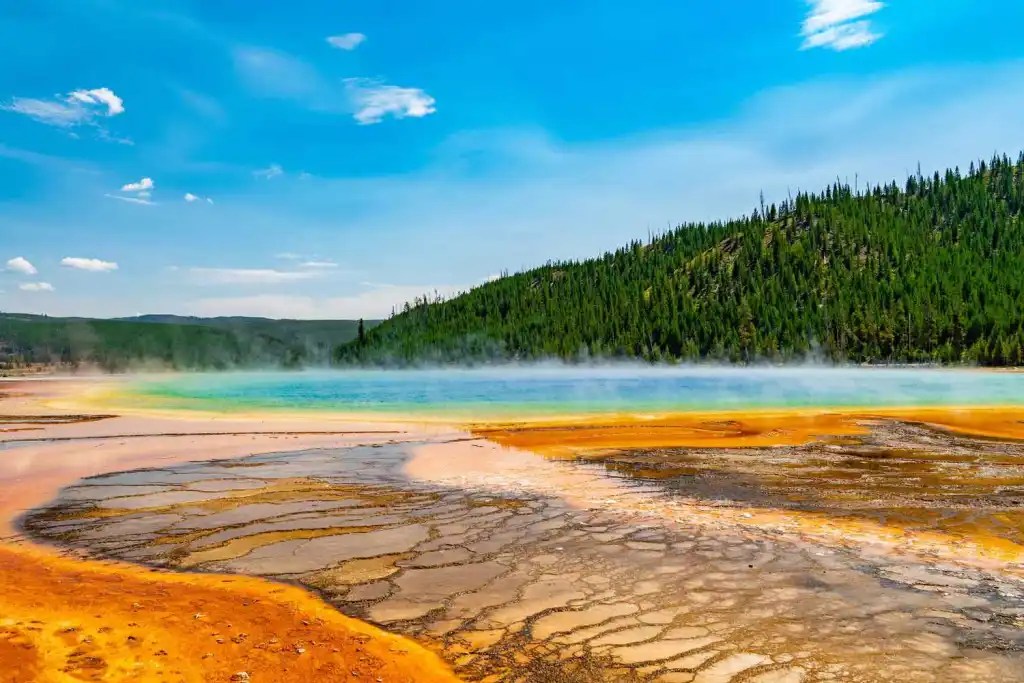
Yellowstone’s past reveals just how powerful this system can be. The region experienced three major eruptions, the most recent occurring around 640,000 years ago. These events reshaped the landscape, leaving behind the massive caldera that defines Yellowstone today. Since then, the system has remained active, but on a much smaller scale, with geothermal features such as geysers and hot springs serving as visible reminders of the heat and pressure below.
What Would Happen in a Future Eruption
If a large-scale eruption were ever to occur, the immediate area would face severe consequences, including fast-moving pyroclastic flows and heavy ashfall capable of covering vast regions. The effects would not stop locally. Ash and gases released into the atmosphere could spread globally, potentially lowering temperatures and disrupting agriculture, transportation, and air travel. While such scenarios sound dramatic, they are based on scientific understanding of past super-eruptions and their known impacts.
Constant Monitoring and Scientific Oversight
Scientists closely monitor Yellowstone through the United States Geological Survey and the Yellowstone Volcano Observatory. Using advanced instruments, they track seismic activity, ground movement, and gas emissions to detect any unusual changes. This continuous observation provides valuable insight into how the system behaves and ensures that any significant shifts would be identified early.
Should There Be Concern?
Despite its potential power, experts are clear that a catastrophic eruption at Yellowstone is extremely unlikely in the foreseeable future. The system shows no signs of an imminent large-scale eruption, and most of its current activity is consistent with normal geological processes. However, the importance of monitoring remains critical, as it allows scientists to better understand long-term changes and maintain preparedness for any possible developments.
A Balance Between Beauty and Power
Yellowstone stands as both a breathtaking natural landmark and a reminder of Earth’s immense geological forces. Its beauty draws millions, but beneath that calm surface lies a system that has shaped the continent over millions of years. Understanding it is not about fear, but about respecting the scale and complexity of the natural world.


