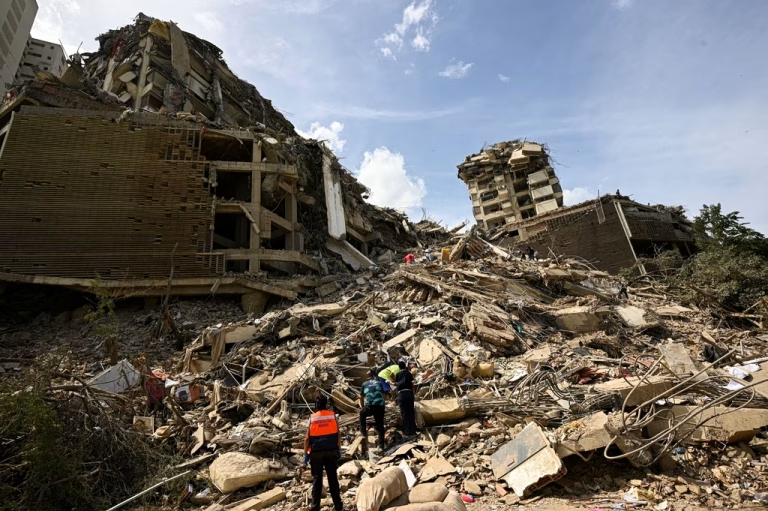
The humanitarian crisis in Venezuela continues to worsen after the powerful twin earthquakes that struck the country’s northern coast, with authorities confirming that the death toll has climbed to 235, while more than 4,300 people have been injured.
Emergency crews remain engaged in large-scale search and rescue operations as they continue searching collapsed buildings for survivors. Officials warn that the number of casualties is expected to rise as rescue teams reach additional damaged areas.
The devastating earthquakes rank among the deadliest natural disasters to hit Venezuela in recent decades.
Death Toll Continues to Increase
Speaking on state television, Venezuelan Health Minister Carlos Alvarado confirmed that hospitals across the country have received hundreds of victims since the disaster struck.
According to the Health Ministry, approximately 235 people either arrived at hospitals without vital signs or died shortly after receiving medical treatment.
Medical officials say emergency departments continue operating under extreme pressure as rescue efforts bring additional victims from the disaster zone.
More Than 4,300 Injured
Authorities also confirmed that more than 4,300 people have been treated for injuries ranging from minor wounds to life-threatening trauma.
Doctors, nurses, and emergency medical teams continue working around the clock as hospitals receive a constant flow of injured survivors from affected communities.
Field hospitals and emergency medical centers have also been established in some of the hardest-hit areas to support overwhelmed healthcare facilities.

Search and Rescue Operations Continue
Rescue teams remain focused on locating survivors trapped beneath collapsed buildings.
Specialized urban search and rescue units equipped with heavy machinery, thermal cameras, search dogs, and listening devices continue operating across damaged neighborhoods despite the ongoing risk of aftershocks.
Emergency officials believe additional victims may still be trapped beneath the rubble, making the coming days critical for rescue efforts.
Authorities Assess Widespread Damage
Government agencies continue evaluating the full scale of destruction caused by the powerful earthquakes.
Hundreds of buildings have either collapsed or suffered severe structural damage, while roads, public infrastructure, and essential services have also been affected in several regions.
Damage assessment teams are working alongside emergency responders to identify unsafe structures and prioritize rescue operations.
Hospitals Under Enormous Pressure
The disaster has placed Venezuela’s healthcare system under significant strain.
Thousands of injured patients have required urgent medical attention, while hospitals continue facing shortages of equipment and resources as emergency operations expand.
Health officials say coordination between public and private medical facilities has helped improve emergency response capacity, although the situation remains extremely challenging.
Humanitarian Needs Growing
As rescue efforts continue, humanitarian needs are increasing rapidly.
Thousands of residents have been displaced after losing their homes, while emergency shelters continue receiving families forced to evacuate damaged neighborhoods.
Authorities are distributing food, drinking water, medical supplies, and temporary shelter as international aid begins arriving in support of the response.
Aftershocks Remain a Serious Concern
Seismologists continue warning that strong aftershocks remain possible following the devastating twin earthquakes.
These secondary tremors pose additional risks for damaged buildings and complicate rescue operations, forcing emergency crews to proceed with extreme caution while searching unstable structures.
Officials continue urging residents to remain alert and avoid entering buildings that may have been weakened by the earthquake.
As Venezuela continues its largest rescue operation in years, authorities warn that both the death toll and the number of injured may continue to rise as emergency teams gain access to the most heavily damaged areas.