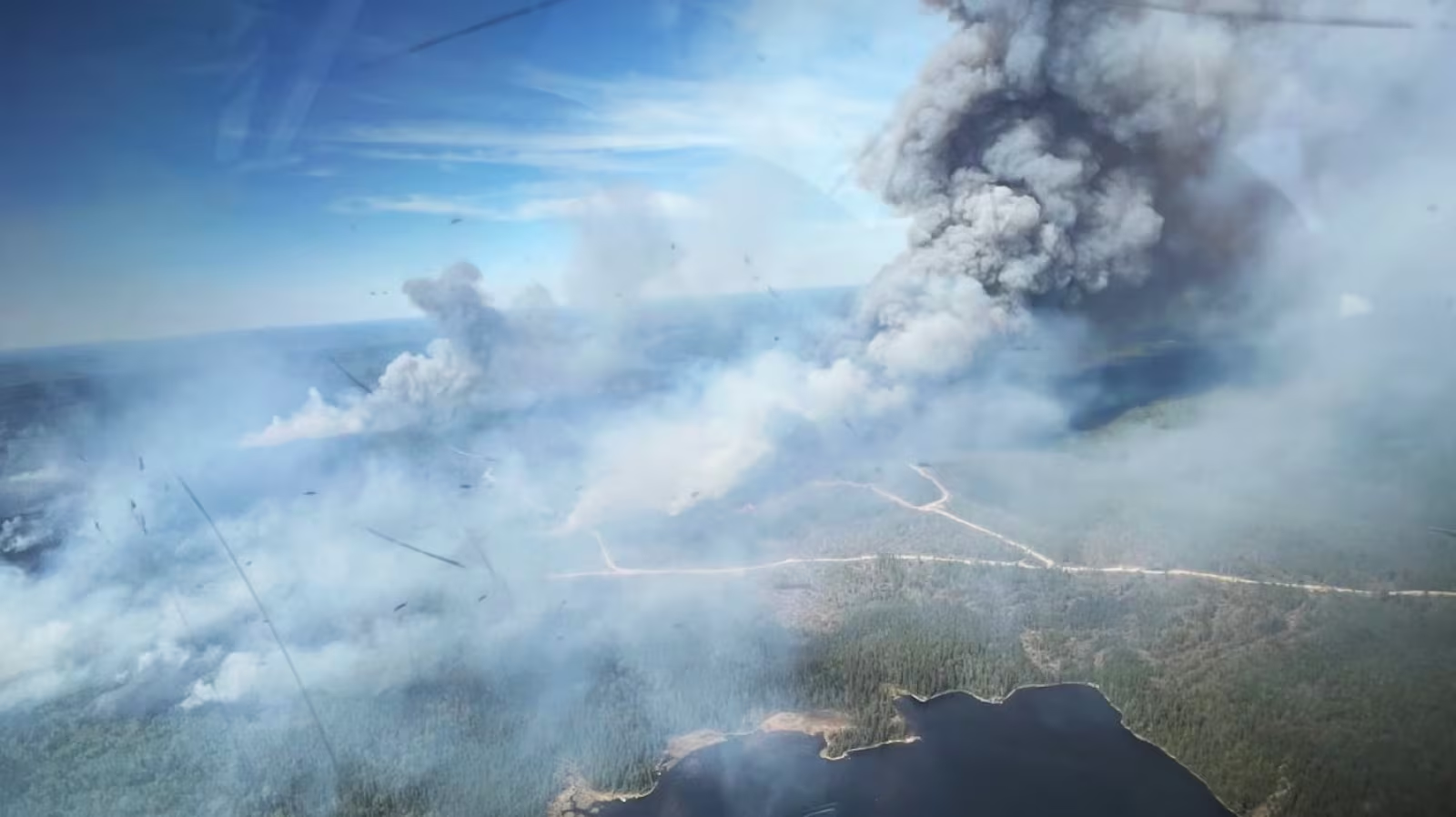
A rapidly expanding wildfire in northern Ontario has forced the complete evacuation of Mattagami First Nation, sending more than 160 residents and their pets to safety as firefighters battle one of the province’s fastest-growing wildfires.
The blaze, known as Timmins 9, has exploded in size over recent days and remains completely out of control, prompting local leaders to declare a state of emergency and order a mandatory evacuation of the community.
Families were forced to leave their homes as dangerous fire conditions intensified, while emergency officials warned that hot, dry, and windy weather continues to fuel the wildfire’s growth.
State of Emergency Declared as Fire Threat Escalates
Community leaders issued the evacuation order after determining that the wildfire posed a serious and immediate threat to residents.
According to Mattagami First Nation officials, the decision followed a rapid increase in fire activity that significantly raised concerns for public safety.
A voluntary evacuation had initially been recommended, but worsening conditions quickly forced authorities to move to a mandatory evacuation order.
Hundreds Forced to Leave Their Homes
More than 160 residents were evacuated from the community.
Some evacuees were transported by bus to the city of Barrie, while others left the region using their own vehicles.
Officials said the evacuation was carried out to protect residents from the growing threat posed by the advancing wildfire.
Pets Evacuated Alongside Families
Many residents refused to leave their beloved animals behind.
Dogs, cats, birds, and other pets accompanied their owners during the evacuation, creating additional logistical challenges for emergency responders and support organizations.
The Ontario SPCA and Humane Society mobilized quickly to assist displaced families arriving in Barrie.
Emergency Support for Animals
Animal welfare teams provided emergency supplies including:
- Pet food
- Crates and carriers
- Bedding
- Leashes
- Collars
- Basic care supplies
Officials said ensuring the safety and comfort of pets remains an important part of supporting evacuees during the ongoing emergency.
Timmins 9 Wildfire Continues to Grow
The wildfire has now expanded to approximately 2,945 hectares, making it one of the largest active fires currently burning in Ontario.
According to Ontario Forest Fires, the blaze remains completely out of control despite aggressive suppression efforts.
Fire crews are facing challenging conditions as dry vegetation and strong winds continue to support active fire behavior across the region.
Firefighters Battle Difficult Conditions
Aerial firefighting operations have been deployed to slow the wildfire’s advance.
Water bombers and helicopters continue to attack the fire from the air, while ground crews prepare to strengthen containment efforts where conditions allow.
Officials say firefighters are working around the clock to limit further growth.
Weather Conditions Fueling Fire Activity
Meteorologists warn that ongoing hot, dry, and windy conditions are creating an environment highly favorable for wildfire development.
Low humidity and dry forest fuels have allowed the fire to spread rapidly, while gusty winds continue to challenge suppression operations.
Fire managers say weather conditions remain one of the biggest obstacles to containing the blaze.
Ontario’s Wildfire Season Intensifying
The Timmins 9 wildfire is the latest example of an increasingly active wildfire season across Canada.
Several provinces are currently battling significant fires as drought conditions and above-average temperatures continue to affect large portions of the country.
Emergency management officials are closely monitoring fire activity as the summer wildfire season begins to intensify.
Community Focused on Recovery and Safety
For now, the priority remains ensuring the safety of displaced residents while firefighters continue battling the growing blaze.
Officials say they will continue monitoring conditions and providing updates to evacuees as suppression efforts progress.
Until meaningful containment is achieved, residents remain unable to return home as crews work to protect the community from one of Ontario’s most dangerous active wildfires.