
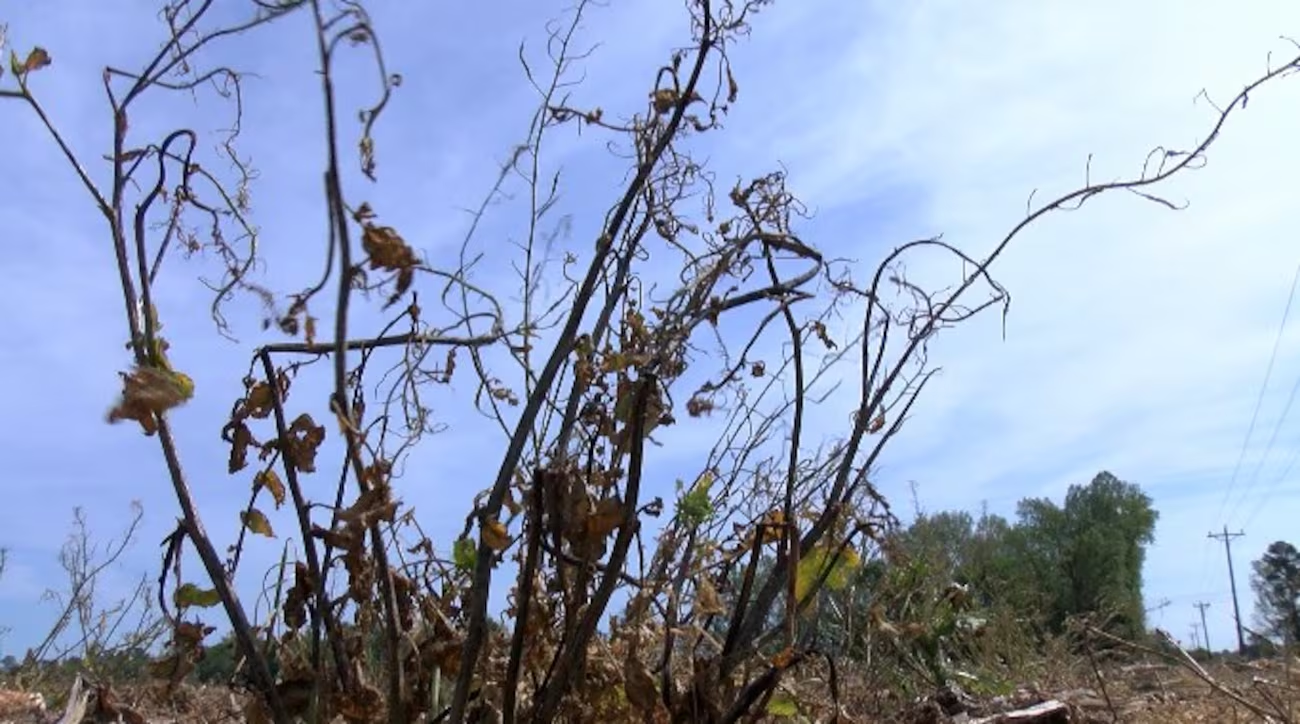
A severe drought has pushed North Carolina into crisis, with 82 counties declared disaster areas as nearly the entire state faces extreme dry conditions.
USDA Declares Widespread Disaster Status
The designation was confirmed by U.S. Department of Agriculture following a request from state officials. Governor Josh Stein announced the decision on April 16, emphasizing the urgent need to support farmers affected by the الأزمة.
Under this designation, farmers in the impacted counties may now qualify for emergency loan assistance and other federal disaster relief programs.
Nearly the Entire State Under Drought
Recent data shows the масштаб of the crisis. According to the latest U.S. drought monitoring updates, 100% of North Carolina is experiencing some level of drought, with approximately 95% of the state facing severe to exceptional conditions.
This places North Carolina among the hardest-hit regions in the southeastern United States.
A Regional Crisis Expanding Across the Southeast
The drought is not limited to one state. Data indicates that over 97% of the southeastern U.S. is currently experiencing drought conditions, pointing to a large-scale климат pattern affecting agriculture, water supply, and ecosystems across the region.
What This Means for Farmers
The USDA defines natural disaster designations as events where weather conditions cause significant production losses. In this case, prolonged dryness has severely impacted crops, soil moisture, and overall farm productivity.
Financial assistance programs are designed to help farmers recover, stabilize operations, and manage losses caused by extreme weather.
Why This Drought Is So Serious
Drought conditions of this magnitude can have long-term consequences. Reduced rainfall, combined with high temperatures, accelerates soil drying and stresses crops during critical growing periods.
Without significant rainfall in the coming weeks, conditions could worsen further, increasing pressure on both agriculture and water resources.
The Bigger Picture
This event reflects a broader trend of increasing climate extremes, where prolonged droughts are becoming more frequent and intense in certain regions.
For North Carolina, the disaster declaration is not just a response — it is a clear signal that the situation has reached a critical level.


