A Short Eruption Draws Scientific Attention
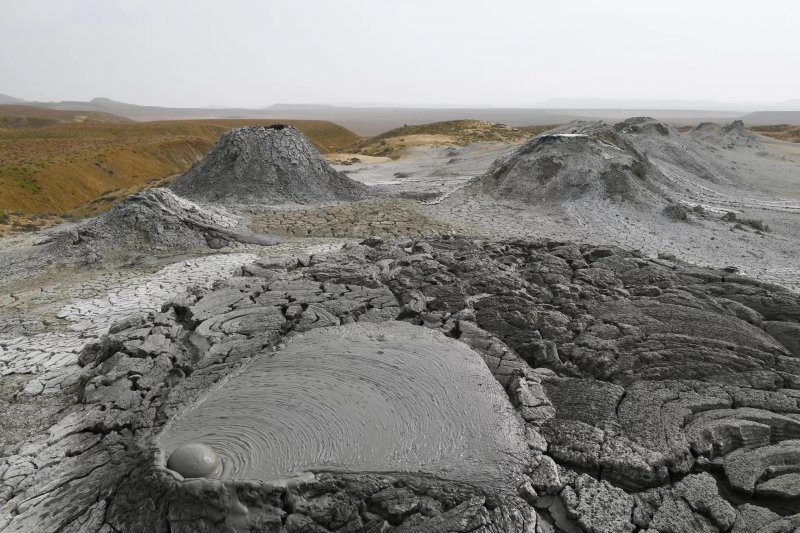
A mud volcano eruption was recorded in Azerbaijan late on April 9, highlighting once again the dynamic geological activity of the Absheron Peninsula.
The event took place at the Bozdag-Guzdek mud volcano and was detected by monitoring systems operated by the Republican Seismological Service Center. According to the agency, the eruption began at 22:26 local time and lasted for approximately six minutes, unfolding in a single phase.
What Scientists Observed
A Single-Phase Event
Experts reported that the eruption did not involve multiple bursts, but instead occurred as one continuous release of energy, which is typical for smaller mud volcano events.
Depth and Energy Release
Data analysis showed that the source of the eruption was located at a depth of around three kilometers beneath the surface. The total energy released was estimated at 6.32 × 10⁶ joules, providing valuable insight into subsurface pressure systems.
Why Mud Volcanoes Are Common in Azerbaijan
Azerbaijan hosts one of the highest concentrations of mud volcanoes anywhere in the world.
Unlike traditional volcanoes, these formations do not erupt lava. Instead, they release a mixture of mud, gas, and fluids, often driven by underground gas pressure and geological activity. These eruptions are closely linked to tectonic processes and can serve as indicators of changes beneath the Earth’s crust.
No Damage Reported After the Event
A Controlled Natural Phenomenon
Authorities confirmed that the eruption caused no injuries or structural damage. Events of this kind are generally not considered dangerous, especially when they occur in isolated areas.
However, scientists continue to monitor them carefully, as they can reveal important information about deeper geological mechanisms.
Absheron Peninsula Remains Under Close Observation
The Absheron Peninsula remains a key location for studying mud volcano activity.
Researchers use such events to better understand eruption patterns, underground pressure systems, and the long-term behavior of geological formations in the region. Even short-lived eruptions like this one contribute to a broader scientific picture.