
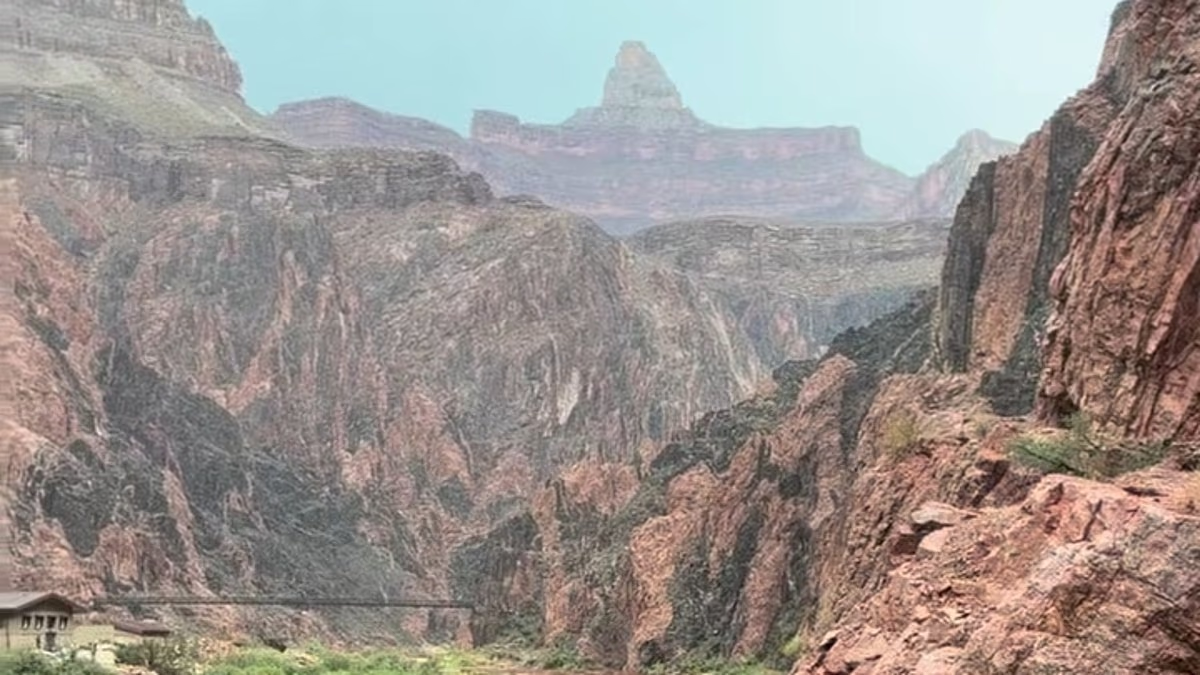
A devastating flash flood at the Grand Canyon in Arizona has left one person dead and around 15 people still unaccounted for, while more than 60 hikers and visitors were evacuated by helicopter from deep inside the canyon.
The flooding struck Bright Angel Creek, a tributary of the Colorado River, after torrential rainfall triggered rapidly rising water, landslides and powerful debris flows through the narrow canyon.
The force of the flood damaged bridges, altered parts of the landscape and caused serious damage to the only water pipeline supplying visitors and permanent residents inside Grand Canyon National Park.
46-year-old man found dead near the Colorado River
The body of a 46-year-old man was discovered Sunday evening near Crystal Rapids along the Colorado River.
Authorities have not released further details about the circumstances surrounding his death.
Meanwhile, search operations are continuing for approximately 15 hikers or campers who have not yet been located or accounted for.
National Park Service officials have urged anyone with information about people who may still be inside the affected areas to contact authorities.
More than 60 people rescued by helicopter
The flash flood struck Bright Angel Creek on Saturday, rapidly turning parts of the canyon into dangerous channels of rushing water, mud and debris.
More than 60 people were evacuated by helicopter from deep inside the Grand Canyon as conditions made evacuation by land extremely difficult.
Arizona public safety authorities also participated in the rescue operation as teams worked to locate hikers and campers scattered across the affected area.
“Waterfalls were appearing out of nowhere”
Survivors have described how quickly conditions deteriorated inside the canyon.
Parth Desai was hiking through a narrow section of Bright Angel Canyon with other doctors and a park ranger when torrential rain began.
Within a short period, the creek started flooding as waterfalls appeared across the surrounding terrain and rocks, mud and landslides began moving through the canyon.
The situation became even more dangerous when one member of the group spotted a wall of water and debris approximately one metre high approaching them.
The hikers immediately ran toward higher ground, eventually reaching an area near Phantom Ranch.
They were later rescued by helicopter.
Flood destroys the area’s only drinking-water pipeline
One of the most serious consequences of the disaster is the damage caused to the pipeline supplying drinking water to tourists and permanent residents.
With water supplies now limited, overnight stays at hotels and other accommodation inside the national park were restricted, while residents were asked to reduce their water consumption.
The water system serves an area that receives around six million visitors every year, as well as approximately 1,600 residents of Grand Canyon Village.
Floodwaters changed parts of the landscape
The power of the water was strong enough to sweep away pedestrian bridges and alter the shape of Bright Angel Creek.
The creek channel widened considerably in places as enormous quantities of sediment, rocks and debris were carried downstream toward the Colorado River.
Initial observations indicated that the debris may also have altered an existing rapid on the Colorado River or created a new feature in the river.
The scale of the damage demonstrates the extraordinary power that flash floods can develop inside the narrow and steep terrain of the Grand Canyon.
Major blow to a $208 million water project
The destruction is also a serious setback for efforts to modernise the Grand Canyon’s ageing water infrastructure.
A $208 million project to rehabilitate the pipeline and upgrade the wider water system began in 2023.
The National Park Service had described the work as a critical investment needed to provide reliable water supplies for residents and millions of annual visitors.
The project had been expected to be completed next year.
Several popular locations, including Bright Angel Campground, North Kaibab Trail and Phantom Ranch, were closed following the flooding.
What caused the Grand Canyon flash flood?
The severity of the event appears to have resulted from a combination of intense rainfall, already saturated ground and the extremely steep terrain of the Grand Canyon.
Between approximately 1 and 2.5 centimetres of rain fell within about 20 minutes over rocky terrain with major elevation differences.
Two smaller rounds of storms had already affected the region before the main thunderstorm arrived, leaving the ground saturated.
When the heavier rainfall began, water was therefore able to run rapidly across the surface and into creeks and narrow drainage channels.
Bright Angel Creek descends from the North Rim toward the Colorado River across an elevation difference of approximately 1,828 metres, allowing floodwaters and debris to accelerate rapidly downhill.
Why flash floods are so dangerous in the Grand Canyon
Flash flooding is one of the most serious weather-related hazards for hikers and campers in canyon environments.
A thunderstorm does not necessarily have to occur directly above a person for them to be in danger. Heavy rainfall kilometres upstream can suddenly send water, rocks, mud and debris through narrow canyons where there may be very few escape routes.
Conditions can therefore change from seemingly calm weather to a life-threatening situation within minutes.
During the summer monsoon season, thunderstorms can develop quickly across Arizona, increasing the risk of sudden flooding across normally dry creeks and canyon channels.
Search continues for the missing
Authorities are continuing efforts to determine the whereabouts of approximately 15 people who remained unaccounted for following the flood.
The disaster has already left one person dead, forced dozens of helicopter evacuations and caused major damage to infrastructure inside one of the world’s most famous national parks.
The search for the missing continues as authorities assess the full extent of the damage caused by the powerful flash flood.


