


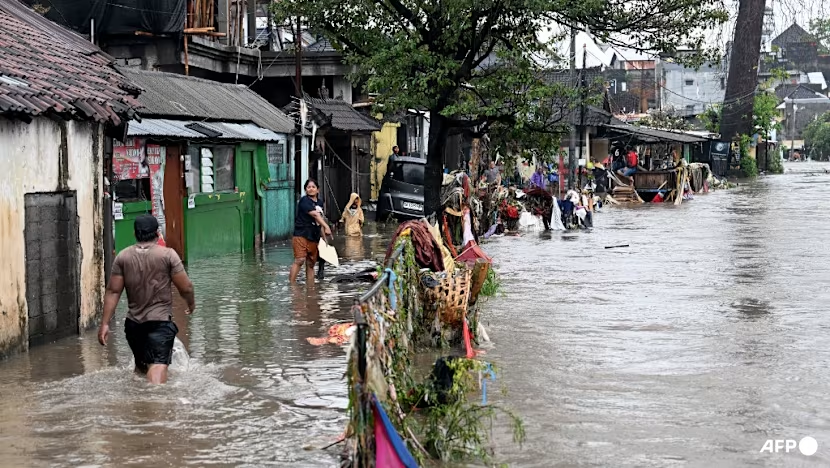
Severe floods swept across the Indonesian island of Bali on September 10, 2025, leaving at least six people dead, dozens displaced, and major infrastructure damaged. The torrential rains, which began late Tuesday and lasted through Wednesday morning, caused rivers to overflow, buildings to collapse, and roads to disappear under water.
According to local authorities, four people were killed in Denpasar, the island’s capital, when two buildings collapsed under the weight of floodwaters. In Jembrana district, two more victims were confirmed, while at least 85 residents were evacuated to safer areas.
One of the most dramatic impacts of the disaster was seen at Ngurah Rai International Airport, Bali’s main gateway for international tourists. Flooding cut off all road access to the airport, forcing authorities to rely on trucks to move passengers and essential goods in and out of the terminal. Around 200 rescuers were deployed to assist travelers and residents affected by the rising waters.
Eyewitness reports described chaotic scenes as vehicles were swept away, homes submerged, and families trapped inside buildings. In some neighborhoods, water levels rose to two or three meters, flooding even two-story houses. A three-story structure near the Tukad Badung River also collapsed, highlighting the destructive force of the rains.
The flooding was not limited to Bali. In East Nusa Tenggara, at least four more people lost their lives, underscoring the widespread impact of the heavy downpours across Indonesia’s eastern provinces.
Authorities have warned that the disaster could have long-term consequences for Bali’s tourism industry, which is still recovering from recent global disruptions. With thousands of travelers stranded and infrastructure severely damaged, rebuilding efforts will be crucial not only for local communities but also for the island’s economy.
As emergency teams continue to clear debris and restore access, officials emphasize the urgent need for stronger flood defenses and climate resilience measures. For Bali, one of the world’s most popular tourist destinations, this tragedy serves as a stark reminder of the growing risks posed by extreme weather events in Southeast Asia.


