


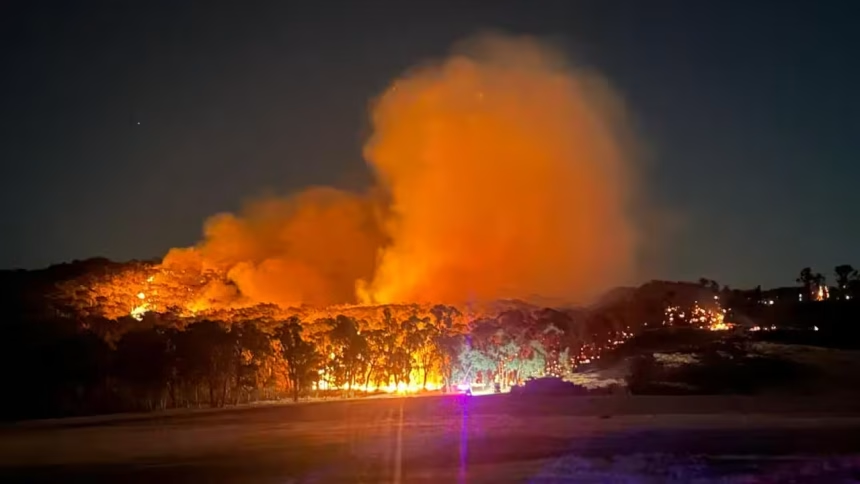
Australia is preparing for catastrophic bushfire conditions in parts of Victoria on Friday, as the country endures its most severe heatwave since the devastating Black Summer fires of 2019–2020.
Temperatures have already soared above 45°C (113°F) in several locations, scorching Adelaide and South Australia before the heatwave was pushed eastward by a low-pressure trough toward the densely populated states of Victoria and New South Wales. Melbourne recorded its hottest day since January 2020 earlier this week.
The extreme heat is forecast to move into New South Wales, including Sydney, on Thursday. Meanwhile, thunderstorm activity on Friday — combined with dry lightning and damaging wind gusts — is expected to significantly escalate bushfire risks across Victoria.
Several bushfires are already burning in the state, prompting evacuation orders for small communities located in the path of advancing flames. The Bureau of Meteorology has issued its highest possible warning, forecasting extreme to catastrophic fire danger across all parts of Victoria on Friday.
Meteorologist Sarah Scully warned that thunderstorms are unlikely to bring meaningful rainfall. “There is very little, if any, rain expected, with much of it evaporating before reaching the ground,” she said. “This creates a serious risk of dry lightning, which could ignite new fires, along with damaging wind gusts that may cause erratic fire behavior.”
Australia’s last major bushfire disaster, known as Black Summer, scorched 24 million hectares, claimed 33 lives, and is believed to have killed billions of animals. A recent report by Australia’s Climate Council warned that millions of people living on the fringes of major cities are now increasingly vulnerable to urban bushfires, largely due to expanding urban development.
The heatwave is also expected to strain the energy system, driving up electricity demand as air-conditioning use surges. Analysts caution that coal and gas power plants may face reduced efficiency, while smoke from fires could disrupt power transmission. Renewable energy output may also fluctuate due to variable wind speeds and cloud cover during peak demand periods.
Experts warn that Friday could be one of the most dangerous days of the week, as extreme heat, volatile weather conditions, and existing fires combine to create a high-risk environment across Victoria.


